
- Published
- Nov 19, 2026
- Reading time
- 11 min read
Meta Pixel Across Countries: A Practical Setup and Currency Checklist
Plan Meta event measurement across localized markets by separating pixel ownership, ad-account structure, Purchase value and currency, and browser/server deduplication.
In this guide (8 sections)
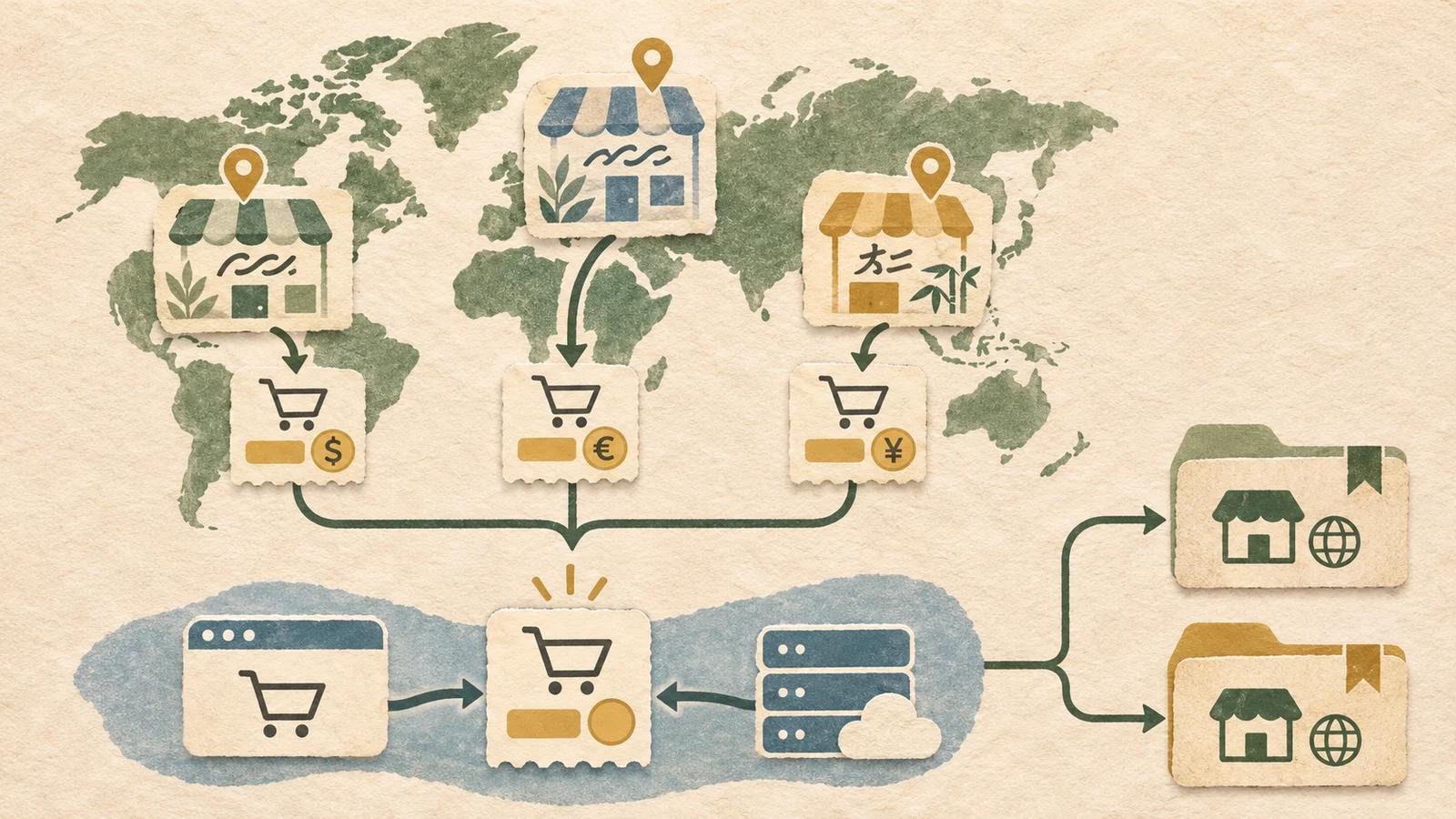
A country URL or currency alone does not decide whether an organization needs one Meta Pixel or several. Separate event-source access, ad-account organization, Pixel routing, and purchase value/currency. Then test browser and server events for each localized checkout.
A recent r/FacebookAds question about advertising across multiple countries asks whether to use one Pixel or one per market, whether to consolidate ad accounts, how to handle different currencies and localized URLs, and what scalable setup to choose. The post says a visitor selects a country or currency and is routed to a localized version of the site. Replies suggested several architectures, but they are practitioner opinions, not Meta policy or evidence that one account structure improves delivery. The direct page displayed five substantive responses in the reviewed snapshot; point and view totals were not exposed. No answer should be read as a platform recommendation unless it is supported by official documentation.
The short answer: decide the event boundary first#
Meta's developer references explain browser Pixel and server Conversions API events, Purchase value and currency, and deduplication when both routes send one action. They do not establish a universal rule for one or several Pixels or ad accounts by country, or that one arrangement improves delivery. Treat architecture as an operating and governance decision, then verify your event contract.
A useful first pass is:
| Question | What should drive the answer | What does not decide it alone |
|---|---|---|
| One Pixel/dataset or several? | Who owns the customer action data, which teams are authorized to use it, and whether the event definitions and business scope are genuinely shared | Country count, currency symbol, or URL path by themselves |
| One ad account or several? | Billing, legal entities, permissions, reporting ownership, and who administers campaigns | Pixel count; the two structures are separate decisions |
| What value and currency go with Purchase? | The actual order amount and the currency of that amount, sent consistently by each event source | The currency symbol displayed in a localized page if checkout settles in another currency |
| How should browser and server events pair? | The same real action, same event name, and matching event identity | Similar timestamps or equal value amounts alone |
This is a decision framework for organizing a measurement implementation, not official Meta account-architecture guidance. If local legal, privacy, data access, tax, or contracting requirements impose a boundary, resolve that before sharing event sources across teams or markets.
Make the next tracking test reproducible.
Use the ungated QA checklist to record event rules, consent, duplicate sends and the report you expect to change.
Read the tracking QA checklistOpens a practical guide. No email required.
Keep Pixel ownership separate from ad-account organization#
A Pixel or dataset is an event destination. An ad account is an advertising-management and billing boundary. It is possible to reason about them separately: an organization might have a shared event source while teams use different campaign structures, or it might need distinct event sources because the businesses and access rights are separate. The precise sharing and permission options depend on Meta's current account setup; confirm them in Business Settings and the relevant official help documentation rather than inferring them from the URL structure.
Before choosing, map:
- the business owner and domain/path for each storefront;
- who owns checkout, order records, ad accounts, and event-source access;
- whether markets share products, customers, and event definitions; and
- any contract, consent, privacy, or access boundary requiring separation.
If the same business owns one site and all markets share an approved measurement purpose, a shared event source may be operationally simpler. If separate businesses, client engagements, data permissions, or event purposes exist, separation may be appropriate. These are governance considerations, not claims that Meta mandates either design. Avoid creating one Pixel per country simply because a URL contains /fr/, /de/, or a country selector; also avoid pooling data across entities without authorization merely to simplify reporting.
A separate ad account may reflect billing, tax, agency permissions, or team access. Those reasons do not dictate Pixel design. Record each decision so an administrative boundary is not mistaken for a tracking requirement.
Make each Purchase event describe the transaction#
Meta's Conversions API custom data reference identifies currency as the currency for the event's value, requires it for Purchase events, and says the currency must be a valid ISO 4217 code. It describes value as a numeric monetary amount and requires it for Purchase events or events using value optimization. Meta's Pixel documentation includes a browser Purchase example with both value and currency; the official Pixel and Conversions API event guide distinguishes browser Pixel events from server-sent Conversions API events.
For each market, define the source of truth before implementing the event:
- Use the amount from the completed order, not a product-page display price, cart estimate, or ad-account budget.
- Send the currency code that actually labels that amount. Do not send a local-currency symbol or guess from the visitor's IP address.
- Keep the event's amount and currency paired. A number without its currency is ambiguous across markets.
- Decide how discounts, shipping, tax, refunds, and subscriptions are represented; use one documented rule across browser and server integrations.
- Convert management reports only under an explicit exchange-rate policy and effective date. Do not add amounts in different currencies as if they shared a unit.
Hypothetical example: a completed order on a French localized checkout settles at €48.50, while another order on a US checkout settles at $52.00. An event contract would send the first Purchase with numeric value 48.50 and currency EUR, and the second with value 52.00 and currency USD. This example does not claim how Meta converts or combines the two values in every report or optimization context. If the organization needs consolidated revenue, its finance or analytics reporting should convert transaction records using an explicit rate and period rule, rather than silently changing the source event amount.
For localized URLs, record where the event occurred. Meta's server event parameter reference says event_source_url is the browser URL where a web event happened, is required for website CAPI events, and should match the verified domain. A shared Pixel does not remove that requirement.
Pair the browser and server copy of the same order#
If a site sends Purchase through both the browser Pixel and Conversions API, implement event deduplication intentionally. Meta's Handling Duplicate Pixel and Conversions API Events recommends matching the browser eventID to the server event_id, with the corresponding event names matching as well. The reference states that when matching events are received within 48 hours, Meta considers the first, with additional handling for events arriving close together. The server-event reference documents the same identity requirement and gives order number or transaction ID as possible event IDs.
Create a stable, unique identifier for each order and pass it to both routes. Independently generating browser and server IDs prevents pairing; reusing a market, session, or Pixel ID for every purchase fails to distinguish orders. Meta's guide scopes deduplication to events sent to the same Pixel ID, so do not assume copies sent to different Pixels will deduplicate across them. Keep IDs free of personal data.
Check the full pair, not just whether two events appear in a diagnostics tool:
| Field | Browser Pixel | Server Conversions API | Validation question |
|---|---|---|---|
| Event name | Purchase | event_name: Purchase | Do both sources represent the same completed action? |
| Event identity | Pixel eventID option | event_id | Is it exactly the same unique order/action ID? |
| Value and currency | Purchase parameters | custom_data.value and custom_data.currency | Do both copies describe the same transaction amount and unit? |
| Source context | Browser page | event_source_url for web events | Does the server event identify the actual localized page and verified domain? |
Meta's deduplication documentation does not say that a matching value or currency can replace the event identity. A single Pixel or a single server route also does not need browser/server deduplication for an event it sends only once. First inventory the sending routes; only deduplicate the events that are truly overlapping copies.
Test every market before scaling#
Use one controlled test order per checkout pattern, including each separate domain or shared-domain localized path. Compare the order record to browser and server events. Do not expose customer data, tokens, or order IDs in screenshots or tickets.
| Test | Expected evidence to compare |
|---|---|
| Localized landing page | Country path/domain, selected market, language, and currency shown to the user |
| Completed order | Order-system amount, settlement currency, discounts/tax policy, and completion timestamp |
| Browser Purchase | Pixel/dataset selected, Purchase, numeric value, currency code, event ID, and page URL |
| Server Purchase | Dataset endpoint, event_name, custom_data.value, custom_data.currency, event_id, event time, and source URL |
| Deduplication | Matching names and event IDs for the same transaction; distinct IDs for different orders |
| Reporting | Market, date range, currency, time zone, attribution settings, and any explicit conversion used for roll-up |
If the browser and server values differ, first compare their raw payloads with the order's source record. A difference could result from separate value rules, a wrong currency code, a checkout redirect, duplicated senders, or testing a different order; a report total alone does not identify which. Check each market's Event Manager diagnostics and server response/error logs available to you. If the source event looks correct but campaign attribution differs, investigate the reporting window and attribution context separately from the purchase payload.
Common mistakes to avoid#
- Treating countries as the Pixel boundary. Market paths and currencies do not, by themselves, determine ownership or access.
- Treating ad accounts and Pixels as one decision. Document billing and permissions independently from event routing.
- Sending the same numeric value with a different currency label. That changes the meaning of the transaction data.
- Sending a converted value without documenting the conversion rule. Preserve the source transaction and keep finance roll-ups explicit.
- Using different browser and server event IDs. Meta cannot pair the two copies using the recommended event-ID method if the IDs differ.
- Reusing one ID for every Purchase. Distinct orders must remain distinguishable.
- Treating event receipt as campaign attribution. They are separate questions.
- Assuming an API field proves an integration is live. Documentation describes the payload contract; test your actual implementation.
A scalable launch checklist#
- Assign an owner and access policy for every business, domain, ad account, and event source.
- Decide whether market separation is required for governance, billing, permissions, or data purpose; do not use country alone as the rule.
- Define a versioned Purchase contract for amount, currency, discounts, taxes, refunds, and timestamps.
- Ensure the browser and server use the same event name and unique event ID for each duplicated order event.
- Confirm each web
event_source_urlrepresents the page where the event occurred and matches the verified domain requirement. - Run an end-to-end test for each distinct domain, localized checkout, and event-sending route.
- Reconcile source orders with browser/server payloads before using aggregated ad reports for business decisions.
- Record attribution settings, reporting currency, date range, and time zone when comparing market totals.
- Recheck the implementation after checkout, consent, domain, Pixel, CAPI, or order-system changes.
AdProof's canonical event model includes conversion ID, value, and currency fields, and its query API exposes conversion currency as a report dimension. These paths support a scoped conversation about event records supplied through a supported collection path; they do not establish a native Meta Pixel or CAPI connector, account-architecture recommendation, or automatic currency normalization. Contact AdProof to confirm whether your sources and market scope are supported. The marketing tracking QA checklist covers broader event-path checks; this guide addresses cross-market ownership and currency contracts.
Frequently asked questions#
Should one company use one Meta Pixel for every country?
There is no universal answer established by the Meta developer documentation reviewed here. Decide based on event ownership, access, and purpose. Country-specific URLs or currencies alone do not establish that a separate Pixel is required.
Does Meta support Purchase events in different currencies?
Meta's event parameter references define a currency for the Purchase value and require a valid currency code. Send the actual transaction amount with its correct currency code. Confirm how your specific reports and optimization settings interpret values before comparing markets.
Does a shared Pixel require the browser and server to use the same event ID?
If both routes send the same customer action and you want Meta's recommended ID-based deduplication, the browser eventID and server event_id should match, and the event names should match. The ID should distinguish that purchase from other purchases.
Should ad accounts also be shared across countries?
That is a separate operational decision. Consider billing ownership, tax administration, legal entities, permissions, and reporting responsibilities. The sources cited in this guide do not establish an account-structure rule for all multi-country advertisers.
Make the next tracking test reproducible.
Use the ungated QA checklist to record event rules, consent, duplicate sends and the report you expect to change.
Read the tracking QA checklistOpens a practical guide. No email required.